Showing posts with label reading. Show all posts

Friday, August 4, 2017

Mobile Suit Gundam: The Origin

My favorite piece of art from the whole series 
Over the last couple years I have been slowly reading Mobile Suit Gundam: The Origin, a manga retelling of the popular animé show.  Set in the Universal Century year 0079, the story follows a now standard trope of inexperienced youths thrust into military conflict by circumstance, and then growing to excel in various roles as the war progresses (itself a type of Bildungsroman).

The animé was first broadcast in 1979, and this manga was started in 2002 and is written and drawn by Yoshikazu Yasuhiko, who was the original character designer for the TV series. Rather than being a strict retelling of the TV show, The Origin adds considerable material and restructures some of the TV show events into a more plausible order.

In 2013 Vertical started releasing the books here in the US in a hardback format.  These are amazing books made in the aizōban style, which means that they are thick hardbacks, super high end paper, numerous color pages, and generally a limited release.  Each volume also has accompanying essays about the importance of Mobile Suit Gundam in Japanese culture or in the anime/manga industry.  Ending with 12 volumes, the work is quite spectacular. Really recommend this series.

Zenon forces at the battle of Odessa

The Blackstars

The two main characters at Gibraltar

Gundam at rest

Battle Scene from book XII
War in the Gundam universe is mainly fought by small warbands of mechs, 60 feet tall, with short range automatic tank caliber guns and close combat weapons, which are prevalent due to the hand-wavium of "Minovsky particles" which prevents such things as radar from working at all, and degrades higher frequency sensors as well.

Gaming the Gundam universe is probably best suited by a set of rules that allows for detailed skirmishes between the warbands, where each Gundam is perhaps treated more like a fighter plane with pilots of different skill rather than using detailed mech rules.  Since ranged fire is only for eliminating mooks and large targets, some sort of dueling skill would be needed to dice off the close combat.  Tanks and infantry and so on are prevalent, but then are often mere annoyances to be swept aside with a single hit.

In terms of figures "Gunpla" is a huge source that can not be ignored.  The term refers to the hobby of building scale models of Gundam (and other robots), and there is such a huge market in Japan (and elsewhere) for these figures that they are available for all configurations of Gundam seen on screen or page, and probably more that never were.  Kits range from your standard plastic model from the early 80's to the totally poseable HG (High Grade) kits with internal skeletons, replaceable hands, and pieces molded in multiple correct colors to minimize or eliminate the need for painting.  The majority of the kits are 1/144 scale, which roughly equates to N/12mm, which is a bonus given the popularity of that scale for model railroad buildings.  Happily this also works well with the boom in 10mm scifi gaming, at least for terrain and civilian vehicles, if one is a purist about military vehicles.

Friday, October 14, 2016

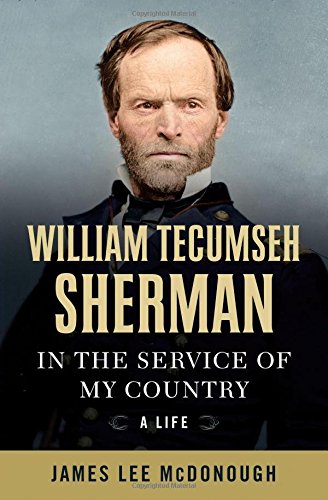
William Tecumseh Sherman: In the Service of My Country: A Life

Nicely colorized version of the famous Mathew Brady photograph
Wednesday I finished reading William Tecumseh Sherman: In the Service of My Country: A Life, by James Lee McDonough.  This is a quite readable biography of Sherman, which draws substantially from the prolific correspondence that Sherman conducted with his wife, family, and others.  Through this book I learned several new things about Sherman's life, particularly the period during which he lived in California, first as an army office, and then as a banker in boom-town San Francisco.  I was also unaware of the political connections of his family, his father-in-law serving as a Senator, and then Secretary of the Interior, and his brother as Senator from Ohio.

As is usual with this sort of book, it would have been nice to have more and better maps of campaigns and battles, and this book also uses the frankly antiquated practice of putting photos together in the middle of the book, rather than interspersed chronologically.  Another drawback was the lack of information from Confederate correspondence, of which I assume there is a large volume.

These few complaints outstanding, I quite enjoyed this book, and would recommend it to anyone interested in American Civil War personalities.

Monday, September 12, 2016

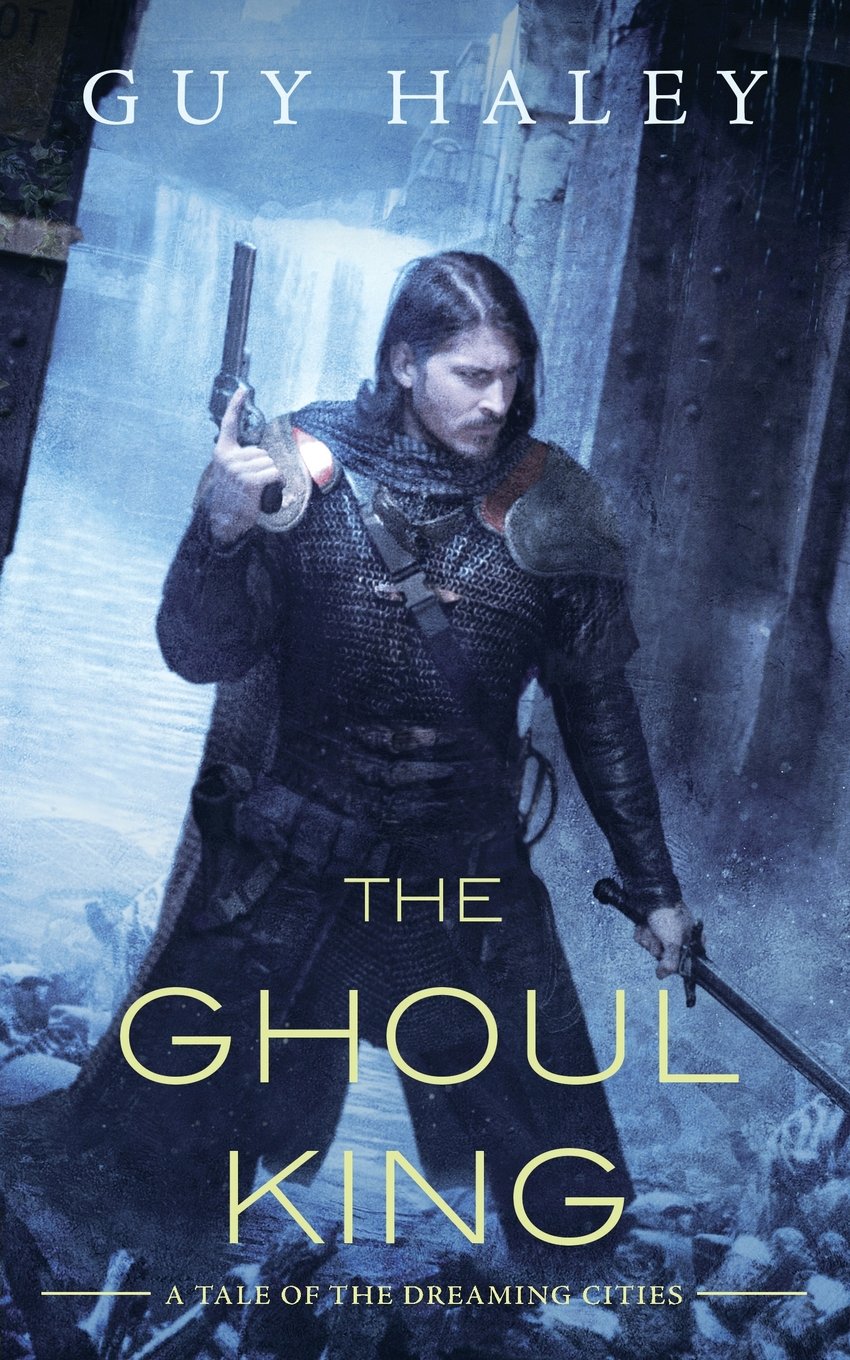
The Ghoul King

Last week I finished reading Star Wars: Bloodline, and was finally able to move on to the second book of the Dreaming Cities, The Ghoul King, by Guy Haley.
I read the first book at the beginning of August, and quite liked it.  Like the proceeding book, this was more of a novella, but this time it felt like the story was more complete in the pages presented.  Following directly on from the prior book, the knight Quinn is dragooned into exploring the ruins of the Dreaming City of Columbus Ohio, which was nuked by the other Angels roughly 20 years prior.  In this story we learn a bit more about how much Quinn differs from the baseline of humanity, and to what lengths the Angels will go to prevent the spread of forbidden knowledge.

As with the first book I really enjoyed the setting, and would like to read more about it.  I did not have quite as much of a "ooh, D&D" response to this one, and instead was thinking about how to game ghouls vs. plucky lower tech survivors (possibly played by cowboy types). I expect that most of the post apocalyptic miniatures games could easily handle a couple of scenarios about having to guard horses, or withstand waves of ghouls departing the city like bats at sunset.

Thursday, September 1, 2016

The Song of Achilles

Last night I finished reading The Song of Achilles, by Madeline Miller.  A fairly good retelling of  the Patroclus/Achilles relationship, and how their lives intersect with the Trojan war (mostly as told by the Iliad). The story is told from the point of view of Patroclus, and starts from before his meeting with Helen and ends somewhat after the death of Achilles.  I particularly liked how Odysseus is characterized, and how the gods are more like creepy alien beings with alien goals, rather than glowing heroic humans.

Now of course what a book like this is really good at is making one want to wargame the conflicts in it... which in this case means the siege of Troy, particularly the "heroic" actions relating to that.  It seems like a larger skirmish game would be the way to handle these battles, something that has a hero emphasis like LotR, which happily has pretty much all of the elements needed already, including chariots and rules for mounting/dismounting, which could be applied to the chariots.

As far as I know, there are two sources of miniatures for this period, Wargames Foundry, and Eureka. Both companies have various supporting lines of ancient civilians and allied states that could prove useful as well, particularly if you are more interested in the fantastic aspects of the battle than in the strictly historical.

Foundry Classical Heroes - TW015

Forthcoming Eureka Dark age Greeks

Monday, August 15, 2016

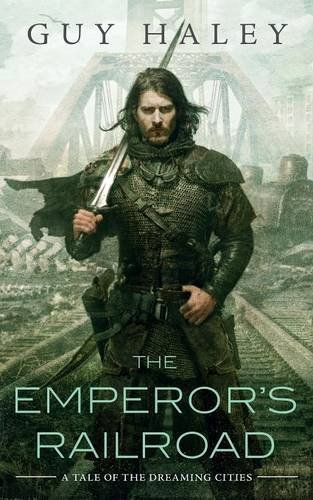
The Emperor's Railroad

I have been on vacation the last week, so have not had much hobby time, but I did get a chance to read a few books, including the Emperor's Railroad by Guy Haley.

Set roughly 1000 years past an apocalypse of some sort, this novella is a recounting of an experience a young boy has with the Knight Quinn as he helps the boy and his mother move from one town to another.  A knight is something of a paladin sort, with access to tools and technologies forbidden to the general population by the Angels. (Aliens? AI? Actual fallen/descended Angels?).  There are also technological artifacts and the undead, which makes for a dangerous trip.

Anyway, the book was good, and I liked its very gritty look at a post apocalyptic world. Characters were well written, and I got a grasp of their motivations and histories fairly quickly. Unfortunately the "book" was very short at 176 pages of fairly large type, and more, it felt a bit short too.  A longer version of this same story would have been very welcome.  That said, I am looking forward to reading the next volume in the series, The Ghoul King, which just was released a month ago.

Another part of this book that I enjoyed was thinking about how well it would fit for a sort of "gonzo" D&D campaign world.  Want to do dungeon crawls where you might fight Zombies/Robots/Dragons/AI/cultists?  Knights with swords and pistols? Well this setting could easily handle all of that, and plenty of detail is available from this book to give your future world a nice gloss. Just the sub title of "the dreaming cities" gets my brain working on ideas, and really that is the sign of a good setting.

Thursday, February 11, 2016

New and Old


Not much going on hobby-wise due to being very busy at work (and then working again at home at night) but I did finish reading the D&D 5th Edition Monster Manual, provided as usual by the local library.  Over all it was fun, although it would have been nice if there was more information about treasures, number appearing, and so on, and I found it an odd choice to list the average results before the underlying hit dice (although this is apparently a 5th edition wide convention, as I saw it in the Player's guide as well).

I also thought it was interesting to compare the rules for a Hydra from the Rules Compendium to this book... you can see that in the 5th Edition book the rules/picture/information on the Hydra cover a full page, and in the Rules Compendium they are much more succinct.  The rules are broadly similar though, which is nice for people who want to convert monsters or dungeons from one system to another.

Monday, February 1, 2016

El Eternauta - The Eternaut

This weekend I finished the new English translation of the classic Argentine comic "El Eternauta". Written by Héctor Germán Oesterheld in 1957, this is a classic story of extraterrestrial invasion. This work features lavish art by Francisco Solano Lopez, whose thick black lines and photo realistic drawings of contemporary Buenos Aires really help to lend the correct atmosphere to the story.
Juan Salvo - The Eternaut
 The story opens with the Eternaut, Juan Salvo of Buenos Aires coming upon the author, and after some time relating to him the story of how he and his friends are engaged in a simple late night game of truco, when a light snow begins to fall on Buenos Aires... killing all life it touches. From there things devolve, as Salvo and his friends must deal with the literal and figurative fallout of the snow, and the other alien activity that they encounter. As much of the story takes place while the men are wearing protective suits, the small glimpses of their faces and the body language are pressed into service to show some of the emotion that you might get from full facial expression.
Click to enlarge for a sample of the art and text. 

Military Action
You really should read this book if you enjoy golden age sci-fi.  Honestly it is surprising that it took so long to get an official English translation, but at least it is this lavish one!

Thursday, December 31, 2015

Imperial Infantryman's Uplifting Primer: Damocles Gulf Edition

Just a quick one today, but earlier this week I read the Imperial Infantryman's Uplifting Primer: Damocles Gulf Edition which is a slim book from Games Workshop published "in universe". It purports to be a guide book given to each recruit in the Imperial Guard, which lists some of the basics for lasgun stripping, aliens (Orks: brittle boned cowards, much less muscular than they appear!) and the like. The book is rather dated now in terms of 40k background, but it was still fun to read, and I appreciated that I was able to get it from my local library, rather than spend the money needed to buy it on Amazon.

This edition of the book adds information about fighting the Tau, which was humorous enough, but it did have a couple of pictures of suitable interest that I copied them here.


The first picture shows the difference between a fine citizen of the Imperium, and a Tau sympathizer.  There are not many pictures of Imperial citizens, so this was interesting.  The second one shows the Tau "blood god" to which captives will be sacrificed.  It occurred to me, that it would indeed be interesting to have Tau cultists, subverting the greater good for their ancient gods, but alas, current 40k has the space commies as being fairly "clean" aside from possible trickery with regard to the various subject/ally races.

Anyway, a fun little book if you can read it for free, but surely not worth $200 to buy it from Amazon.

Wednesday, December 30, 2015

Star Wars Costumes: The Original Trilogy


 Over the last few weeks, I have been very slowly working my way through Star Wars Costumes: The Original Trilogy, provided as usual by my local library. Originally, I got this book with the intent of showing it to my kids, but it had rather fewer pictures of completed costumes than I expected, and the text was much more interesting, so I ended up reading it.  Far too large for bedtime reading, (being coffee table sized), it took me a while to get through.  The book is lavishly printed on high gloss paper, which makes it hard to photograph, but it has a ton of interesting information (as one might expect) about Star Wars costuming, but also about costume design generally, which I think allows it to carry over into design for Inq28 figures, or role playing games more generally.   Other than reminding one that John Mollo is a genius, and that George Lucas has very specific ideas on how things look, it also really made me think about costume choice and design in a way that I had not before.

Below are a few pictures of things which I thought might be interesting for future reference. The pictures were taken at night with my cellphone, so they are not the best (plus the glossy paper), but I think you get the idea (and can click on them to enlarge in any case).
Different rebel helmets
These are rebel helmets from A New Hope, which show the various variants for different pilots. The two red and white ones I find to be particularly interesting.
This Lando design needs to be made for space roleplay
Lando went through a few designs before they ended up with space pimp, but the picture above seems like he would fit into the 40k universe nicely as some sort of governor or rogue trader.
Pig faced Orcs in SPAAACE
Is that first picture of the Gamorian a pig faced orc or what? Not even a blaster on him.
Rebel Techs
There were several sections about rebel technicians from the Hoth base, and the RotJ scene where Admiral Akbar is addressing the fleet. Unfortunately there are not too many pictures of the concepts from this project, since the discussion is excellent, and regular rebels are fairly underrepresented generally.
Original Akbar design, showing his helmet and a more complicated yoke for his outfit
Another interesting part of the book was discussing the use of military styling vs. civilian styling to emphasize the warlike nature of a character and the end of conflict at the end of RotJ. Specifically cargo pockets were used for "warlike" clothing, and no pockets or smooth flat pockets for "peace" clothing. This made me think about how we adorn Inq28 characters, because most of the bitz we have for figure construction are from soldiers, and they end up making Inquisitors look like they are in the middle of the battle of Verdun, when at least some times, and for some characters, they should look like they are going to court instead.  Something to consider next time you are putting a figure together.

Tuesday, December 1, 2015

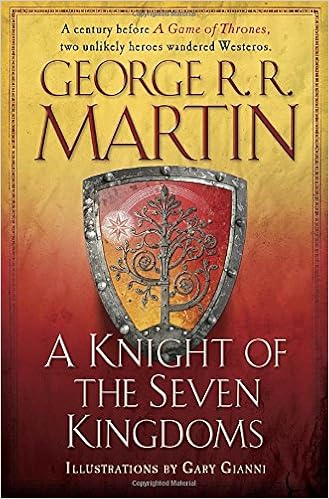
A Knight of the Seven Kingdoms

Picture cribbed from Amazon
Yesterday I finished reading A Knight of the Seven Kingdoms by George R, R. Martin, which is a compilation of three novellas featuring Ser Duncan "Dunk" the hedge knight, and his squire "Egg". Set a few generations before the events of the Song of Ice and Fire stories, you really get a feel for Westeros in a time of relative peace.  The stories are easier to read that the Song of Ice and Fire books, both because they have fewer characters, and because they are, as mentioned above, set in more peaceable times, so the outright horror of the other books is not as present.

Another interesting feature of this book is that it is lavishly illustrated, with over 150 illustrations of various sizes by Gary Gianni. [who apparently illustrated Prince Valiant for a while, which certainly carries over into his illustrations in this book] While the illustrations do not match the text exactly, they are excellent, and the book is probably worth paging through just to look at the pretty pictures... something you do not get to say about fiction books very often.  Amazon has a preview of the book which shows some of the pictures.

I really enjoyed these stories, and look forward to reading the promised 3-9 more when they come out... probably in 15 years at GRR Martin's usual rate.  Tales of knightly daring do, and honorable men in dishonorable company really appeal to me, and I like the setting, as there is even less magic than the War of the Five Kings era, and the military technology is transitioning from mail with plate to full harness.

I have discussed miniatures for Game of Thrones actions before, but while the Perry War of the Roses figures are suited for the War of the Five Kings (and plastic!), the earlier era is best suited by the Agincourt to Orleans line (now with its first plastic set, and forthcoming French set).  This is imperfect at best, since naturally a range aimed at Agincourt is focused on archers and wealthy men-at-arms in full harness, but supplementing with other Perry figures, Claymore Castings figures (particularly the Scots 1388 line), and other lines should do the trick.

Jousting figures heavily in the book, and playing a jousting game with just a few knights always sounds fun.  The 5th edition Bretonnian knights are ideal for this, but as those are more than a decade out of print, the Fireforge Teutonic Knights with some conversion would do nicely as well (particularly with some more "fantasy" heads).

Aside from miniature gaming there is plenty here to inspire for role playing as well, particularly in the middle story, which gets heavily into minor barony politics, and the various dynastic discussions.  A game like Pendragon seems ideal here.

Tuesday, November 24, 2015

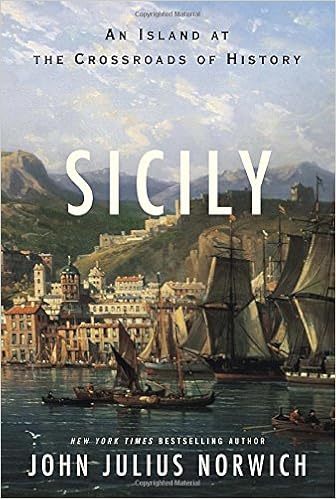
Sicily: An Island at the Crossroads of History


This morning I finished reading Sicily: An Island at the Crossroads of History, by John Julius Cooper (Viscount Norwich, thus known as John Julius Norwich).  This book attempts to cover all of Sicily's history from antiquity to modernity, and generally does so. The book really begins in the Greek era, when Sicily was central to the imperial ambitions of Athens, and in common with other the rest of the Greek world, minor city states struggled and battled against one another. In some ways this never changes, as one power after another takes over the island, from Carthage, all the way to Piedmont in the Italian unification.

Norwich clearly knows certain periods of history well, and enjoys discussing them in greater detail than others. As might be deduced from his CV, Normans and the Norman kingdom of Sicily figure heavily, but he also apparently is quite taken with Nelson and the Hamiltons, and spends an inordinate amount of time discussing their various permutations and interactions with the court of Naples.  This section was a hard slog, and it took me several days to get though. In this book at least Norwich is clearly writing a "popular" history, rather than a scholarly one, and opinions, anecdotes and partisanship run throughout. [short, non-comprehensive list of things Norwich does not like: Napoleon, peasants, Spain, Monty, Mussolini]

I will say that I knew very little about Sicily prior to reading this book, and I certainly enjoyed most of it, but the Bourbon period is a hard slog, and the post unification era (150 years) is breezed through in just a few chapters which was very disappointing (the book effectively ends with the occupation of Sicily in 1943 [Operation Husky, which my Grandfather participated in as an ordinance officer]), giving little feel for contemporary people, and no idea what to expect for the future. So, I would recommend the first portion of this book unreservedly, but if you have little interest in court machinations of the Bourbons during the Napoleonic era, you are probably better off skipping that section.

Now as for wargaming, Sicily was a battleground for the Peloponnesian war, Punic wars, and Second World War, so there are plenty of opportunities to have a battle or two set there. Operation Husky in particular seems to be pretty interesting, with its "midwar" setting, and mix of forces present.

Thursday, July 9, 2015

The Battle of Midway

The last few days I have been reading the Battle of Midway by Craig L. Symonds.  A very readable general history of the early days of the war and of course the battle itself.  The book starts right after Pearl Harbor when Nimitz is assigned to CINCPACFLT, covers the battle of the Coral Sea, the Doolittle raid, and then fairly exhaustively covers the planning and execution of the actual battle.

Prior to reading this book, I did not know much about Midway, other than that crypto intercepted some of the plans from the Japanese, and that the torpedo bombers were wiped out, which allowed the dive bombers to do their thing.  I saw some reference somewhere to how D-day was celebrated, but Midway was not, even though Midway was much more critical to the overall war effort, and that prompted me to read this book.

As this book is fairly new, it covers the most current research and understanding of the battle, which at least in a few cases is counter to the "received" history that many understand.  The author spends extra effort to explain what the crypto folks did and did not have on the Japanese fleet's movements leading up to the invasion of Midway, and extra effort explaining what happened during the "flight to nowhere" when the USS Hornet's attack element flew away from the known contacts until they had to turn back for loss of fuel.  In the first case the crypto folks had the date, target, and rough composition of the Japanese forces deduced, but not composition of task forces, or actual locations. In the second case the flight probably suffered from a combination effect of looking for a "second carrier group" (however, all four were operating together), and poor navigational technique.

This book was quite enjoyable, and given that it is clearly a "general history" rather than a scholarly work, quite readable as well. I can now say that I know quite a bit more about the battle and what lead up to it, and since that was the goal of the endeavor, it should be judged as a success. The book also made me more interested in gaming this period, and I spent some time looking at the (glorious, and at $20 per CV costly) GHQ 1/2400 ships.

Wargaming the Battle of Midway specifically would be difficult, since the battle hinges on the surprise of having three carriers where none are expected, timing of search patterns, and of course beyond visual range combat, none of which are easy to incorporate in a game, particularly without umpires (or computers). For that reason, it seems that a board game would probably do it best; however a search of boardgamegeek did not yield a clear "winner", so that avenue remains to be explored.


Monday, June 29, 2015

Comic reading

Recently JB, author of Leadplague, had a run down of some influential comic books, which prompted me to order some from the ever handy inter-library loan service. While most of the titles recommended were not available, I was able to get a copy of The Incal, and Judge Dredd Case files.  My wife had her wisdom teeth taken out last week, so I had plenty of time to read, and managed to get through all three books.

The Incal: The epic conspiracy
This book is part of a larger Incal cycle, which unfortunately continues beyond this volume.  Unfortunate, because this might be the only one I can get through the library.  However, the story that is contained here is pretty good, particularly the first part, which is set in a hive city and features John Difool finding the titular Incal. Lots of great artwork here, as might be expected from Moebius. The story gets decidedly weirder as it goes on, and the travelers featured on the cover here travel "down and out" so to speak.  The hive world scenes would be useful I think for Rogue Trader/Necromunda, and some of the other sequences were pretty evocative for gaming as well.

Judge Dredd Case Files V1 and V2

I am sure that most of you are familiar with Judge Dredd, if only because of "I am the Law!"  In any case, Judge Dredd is from a future Mega City One (the East coast of the US) where Judges are selected/created to enforce the law in a strict, and sometime brutal way. These two books collect most of the first Dredd stories from the 2000AD comic book.  These volumes are in black and white (as was the majority of the source art I believe), and I really enjoyed some of the longer stories that would have stretched out over multiple issues, particularly the Judge Cal sequence.  Plenty more of these are available from the library, so I will be getting a few more of them.

Happily Judge Dredd miniatures are available from both Wargames Foundry and Warlords Games (from Mongoose) I believe that the ranges are broadly compatible, but it is hard to say for sure without having them in front of you (and I have read that some of the Mongoose figures are not necessarily internally compatible, being from different sculptors). Foundry's figures are specific characters, taken from these early Dredd stories, which is nice, since I now know the stories behind the evocative figures.  Mongoose's figures seem more in support of skirmish gaming, and are more generic in nature (citizens, Judges, punks, etc.)

In any case, plenty of figures available to create some Mega City One skirmish action, or battles between judges from different Mega Cities.

Some of the figures would also be useful for Rogue Trader-esque games, which of course makes sense, given the influence of Dredd and 2000AD generally on Rogue Trader (and Necromunda).  In particular the MegaCitizens A and B would be great to mix in with more "standard" 40k civilian types, and more random weapons are always useful as well. Plus Walter.  Everyone needs Walter the Wobot.

Friday, June 12, 2015

Homage to Catalonia

This week at work I read George Orwell's Homage to Catalonia , his 1936/37 account of his brief time in the Spanish Civil war, and the Barcelona fighting between the anarchists and communists. Mr. Orwell fought as a member of a later suppressed Marxist militia (POUM), and was seriously wounded on the front lines near Huesca. He then returns to Barcelona to find his organisation has been suppressed, and his membership in the party a liability, and manages to escape Spain.

The book itself is excellent, and very readable, as one might expect from Mr. Orwell. Reading it contrasts the civil war in Spain with the experiences of soldiers in the Great War, particularly as Mr. Orwell was involved in static trench fighting and sieges, neither changed much by the limited introduction of airplanes and tanks. Mr. Orwell himself comments on this, as much of the equipment issued at this stage of the war to the Anarchist Militias is very old, or home made.

War-gaming the Spanish Civil War is very popular, at least outside of Spain.  With the sort of "proto-WWII" feel of the war, but Great War style battles, and the large international aspect, it seems to attract war-gamers interested in the more colorful aspects of the war, as well as those interested in smaller scale actions. (company or smaller)

Another reason for its popularity may lie with the excellent miniatures sold by Empress Miniatures. Great looking figures, and at £7 for 4 figures, a nice price as well.

Picture from Empress

Tuesday, April 28, 2015

Defeat by Phillippe-Paul De Ségur

As I have mentioned before, I have been doing a lot of reading lately (and not as much hobby as a result).
Probably not a period picture...
Thanks to my local library, I have just finished reading Defeat by Philippe-Paul de Ségur, who was an Aide-de-camp during Napoleon's invasion of Russia, and thus, was there to see much of what he writes about in this book discussing the Grand Army's invasion of Russia, and its subsequent defeat by winter and poor planning. This version of his book is a abridgment of the original two volumes (Histoire de Napoléon et de la grande armée pendant l'année 1812) published in 1824.

The book is full of vivid detail, although it tends more to salacious anecdotes than to detailed history, as might be expected by the publication date (and possibly due to the abridgment as well).  The author seems to have a poor opinion of Berthier, Napoleon's chief of staff and blames him in part for some of the disaster. By contrast, de Ségur, paints Eugéne de Beauhamis in a very heroic light.  (interestingly both Berthier and Eugéne were relatives by marriage to the King of Bavaria).  As might be expected from an Aide-de-camp, the more personal stories tend to be of arguments between the marshals, and not of combat action.

The book is full of great scenes like this one:

The terrain he [Napoleon] had to cross to reach Moscow presented a strange appearance.  Enormous fires had been lit in the middle of the fields, in thick, cold mud, and were being fed with mahogany furniture and gilded windows and doors.  Around these fires, on litters of dam straw, ill-protected by a few boards, soldiers and their officers, mud-stained and smoke-blackened, were seated in splendid armchairs, or lying on silk sofas. At their feet were heaped or spread out cashmere shawls, the rarest of Siberian furs, cloth of gold from persia, and silver dishes in which they were eating coarse black bread, baked in the ashed, and half-cooked, bloody horseflesh - strange combination of abundance and famine, wealth and filth, luxury and poverty! 


So, an interesting book, and you should check it out.
Gaming: As you might expect, the Perrys have a complete range of figures that would be useful for gaming the various parts of the 1812 expedition, both in the beginning as the Grand Army, and the disastrous retreat.  It has certainly increased my interest in the retreat, and in the following 1813 campaigns.

Thursday, September 11, 2014

Gaunt and Bone

Recently I have finished the first two novels of the Gaunt and Bone Series, by Chris Willrich. In these novels, a thief couple of Imagio Bone and Persimon Gaunt, travel to the far east of their slightly like the Earth to their not-China.  In the first book, the Scroll of Years, they travel to Qiangguo, meet various people there and end up embroiled in both local politics and the affairs of dragons.  In the second book, they travel west on a quest to find the Ironsilk Moths, which has been demanded as a price to get an item they most desire.
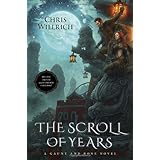

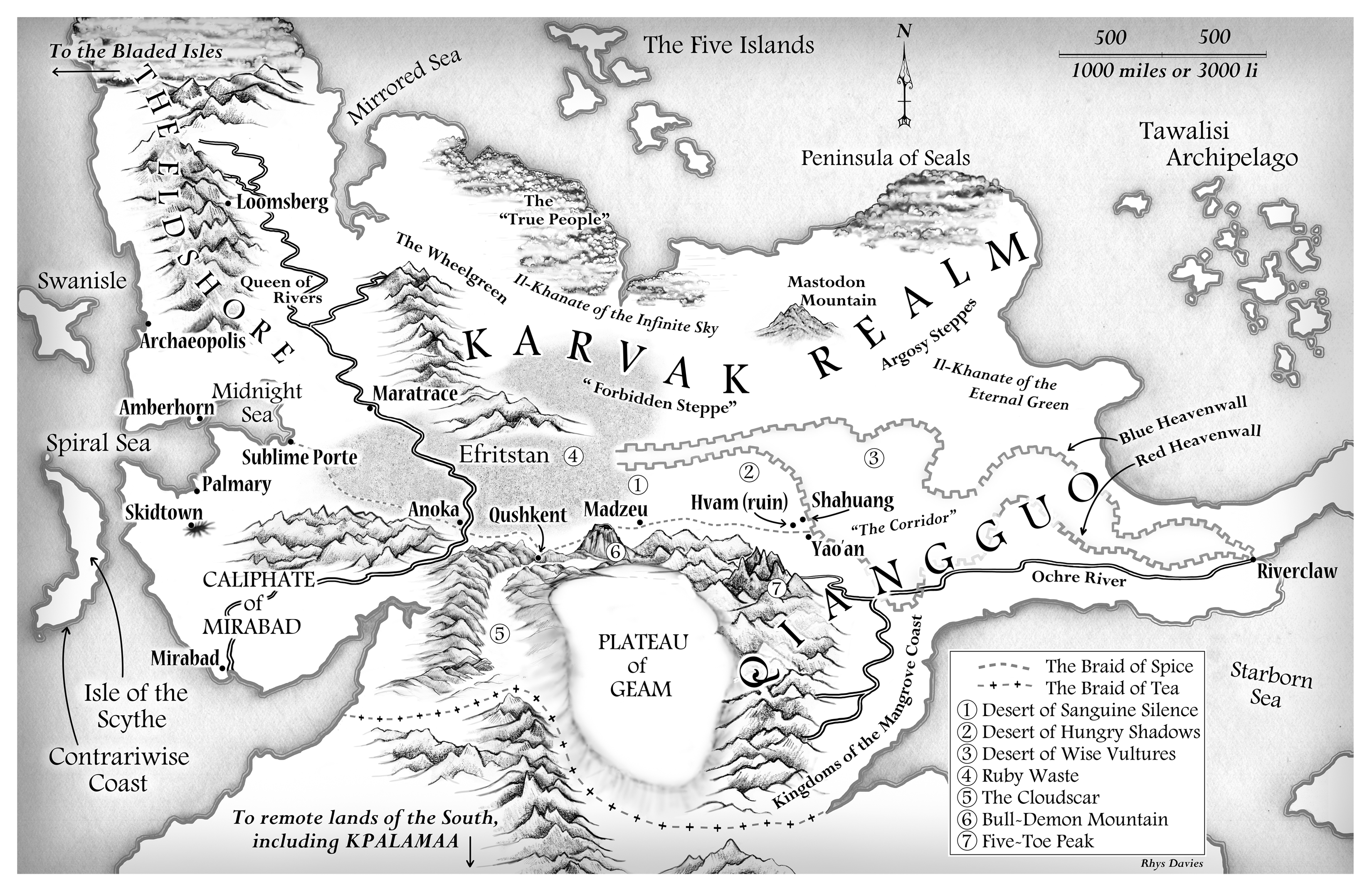
The books are pretty good, although a bit rushed as they are harried about the country/world. Bone is a 99 year old master thief, although often out of his element in combat or against wizards.  Gaunt is a poet/bard/thief, and often ends up being the hero, since she is a bit more combat worthy.  Both books are set in the East, and have a heavy "fantasy Asian" theme, which is alternately refreshing and bafflingly new.  Reading the second book, I would have benefited more from a more detailed review of the map, since I apparently got the fantasy world mixed up with the real one, and had a different mental picture of where they were traveling.

The World of Bone and Gaunt
I also liked how there were various fantasy ideas which seem ripe for theft and incorporation into your D&D game.

Examples:
Ur-Glue - magical ultimate glue that can not be undone, which is used in some pretty amusing ways.
Iron Silk Rope - rope made from silk as strong as iron, and can bear nearly any weight
Flickering Fire-gems - alchemical gems which contain candle fire
Living Calligraphy - calligraphy as spell scrolls, where a traditional saying acts itself out in some way.
Mummified Kraken - an ultimate undead monster.
Kleptomancer - creates nothing new, but steals knowledge from others using magic.
Magically cutting off an ear to be left in another location as a spy or communications method

There are also a couple of great magical libraries and plenty of weird magical creatures.

Wednesday, July 23, 2014

Birthday 2014


This weekend we celebrated my birthday, and I got some loot that you may find interesting.

First is the TIE Defender for the X-wing Miniatures game.  The Defender was always my favorite in the old TIE fighter computer game, and it should be pretty powerful in the table top game too.

Second is Justice League: Axis of Villains, which is a strategy game about defending the Justice League tower from an onslaught of villains. 

Third is the King's Quest collection, which collects together the King's Quest games 1-7.  I have heard that there are some problems with playing these games on newer computers, but I loved them as a kid, so I will jump through some hoops in order to play them.

Finally, we have The Landmark edition of the Campaigns of Alexander by Arrian, which I am very excited to read... sometime.  However, there should be plenty of gaming ideas in that book, which I look forward to. 

Friday, December 27, 2013

Burning Paradise


The last week or so I have been working my way through Burning Paradise by Robert Charles Wilson, an author previously unknown to me.  The premise of the book is the main draw here, as the actual story is more than a little depressing: The history of humanity has been shaped by an extra-terrestrial entity dwelling in the upper ranges of the atmosphere, which edits electronic signals to make humanity more peaceable.  Consequentially, there is no war after the Great War ends in a truce, technology stagnates, and the world slowly lurches its way along in a sort of quasi Edwardian/Progressive path of progress to 2015 where the story begins.  The characters are survivors of the correspondence society which figured out the existence of the ET, and was attacked by green goo filled human simulacrums driven by the ET in 2007, and now, it appears that the ET is sending the sims on attack again.

The book does have some interesting ideas on what it means to be hyper-aware but not conscious, and the book within the book, The Fisherman and the Spider, has some interesting thoughts on this, using the biological research of the in book author to draw some conclusions about the ET.

The world posited would also make for some interesting gaming scenarios, as you have 1914 map lines into the 1950s, and only low level conflict is allowed by the ET, so military development is highly retarded.  Consequently you could make great use of inter-war miniatures for battles in the Sudetenland, or the multi-decade Russian civil war etc. Empress miniatures has a great selection of figures for that sort of fighting, from both their own lines, and those they distribute.

Monday, December 16, 2013

A Close Run Thing

Picture from Amazon
This weekend I finished reading A Close Run Thing, by Allan Mallison. Acquired thanks to the local library, it is a Napoleonic historical novel, which introduces the character of Coronet Mathew Hervey of the 6th Light Dragoons.  Hervey is a young man of somewhat limited means in the times of purchase (a system where officers bought their rank in the regiment).  The book opens in the waining days of the French Empire, as Wellington's army crosses into France, and the Emperor abdicates.  Hervey is then posted to Ireland, and returns to the Continent for the battle of Waterloo.

I was originally fairly taken by this book, and was preparing to write a positive review; however, I quickly realized that unlike, say Sharpe or Hornblower, Hervey has no flaws, other than a naive blindness to the motives of others.  In addition to processing no flaws, young Hervey marries into wealth, is the best horseman in his regiment, the best with a saber, knows horses better than the regimental vet, has the best batsman, the best sergeant, speaks French "like a native", has German, Latin, and Greek, can impressively debate strategy with Wellington, is an amazing shot with his amazing breach loading carbine, falls into money whenever required, and very fortuitous in his acquaintances.  There are more attributes, but you get the point. Hopefully this is rectified in later books (of which there are many), but by the end of this one I was ready for it to end, and have little to no desire to continue on with the rest.

In addition to flaws in writing, the book has a few factual errors. For example, much is made of a passage from Pride and Prejudice, and the book is attributed to Jane Austen, when in fact the book was published anonymously and Ms. Austen was not identified as the author until after her death in 1817.  Mr. Mallison also calls a flintlock "a firelock" many times in the book, when that term is usually reserved for a matchlock.

Flaws and annoyances aside, there are some interesting parts of this book, and there is certainly a lack of description of cavalry action in novels, so that aspect is welcome.  All in all though it is hard to recommend this book unless you really like your protagonists to be practically perfect in every way.

Here is a link to some reproduction light dragoon weapons, so you can get a feel for what the author tosses around.

Friday, November 15, 2013

Napoleon's Cavalry

Emir Bukhari
This week I finished reading Napoleon's Cavalry, by Emir Bukhari, illustrated by Angus McBride.  Supplied by my local library system, this book is a single volume compilation of five Osprey Men-At-Arms titles, and was published in 1979.  It covers Napoleon's Cuirassiers and Carabiners, Dragoons/Lancers, Hussars, Line Chasseurs, as well as Guard cavalry units.  I got it as a painting aid for the Perry plastic dragoons on foot that I got a while back.

Considering that Osprey still sells the constituent volumes for £10, this book seems to be an excellent value for anyone who is building more than one sort of regiment, or who just likes to look at colorful illustrations, particularly as it can be had used on Amazon for as little as $15. (or possibly free from your library)

This book does have the usual Osprey "style", where color plates are separated from relevant text, all other images are in black and white, and far too much attention paid to officers and other unusual members of a unit, but this is somehow more excusable in a book published in 1979 than it is in their modern reprints.

As you can see from the scan below, the original artwork is quite excellent, as you might expect from an Angus McBride book. With so many plates, the book is worthwhile to review, even if you do not value the text.
Who else would illustrate a Dragoon officer cleaning his muddy boot?
Speaking of the text, Mr. Bukhari's prose is quite refreshing, particularly after reading the mess that was my last Osprey title...  The text for the more important books covers uniforms, deployments, equipment, saddles, and all sorts of side information that makes it very entertaining.

So in conclusion, I highly recommend this book, and will be buying it for myself sometime in the future.